


Safety Officer Course in India – Fees, Duration & Career Path

- info@safetymastery.com
- +91 7200322134


What is a Safety Officer Course?
What is a Safety Officer Course?
A Safety Officer Course is a professional training program designed to equip learners with the knowledge and skills needed to maintain workplace health, safety, and compliance. This course covers essential areas such as fire safety, construction safety, industrial hazards, risk management, first aid, and legal compliance, preparing candidates to work as certified safety professionals.
By completing a recognized Safety Officer Course in India, such as BSS Diploma, ESC IDHSE, Level 7 OHSM, or Level 7 PSM, candidates gain both theoretical knowledge and practical training. The program also enhances career opportunities in industries like oil & gas, construction, manufacturing, and healthcare.
For aspiring professionals, Safety Mastery provides government-approved and internationally recognized safety courses with flexible learning options (online and classroom), ensuring job-oriented training and global career scope.
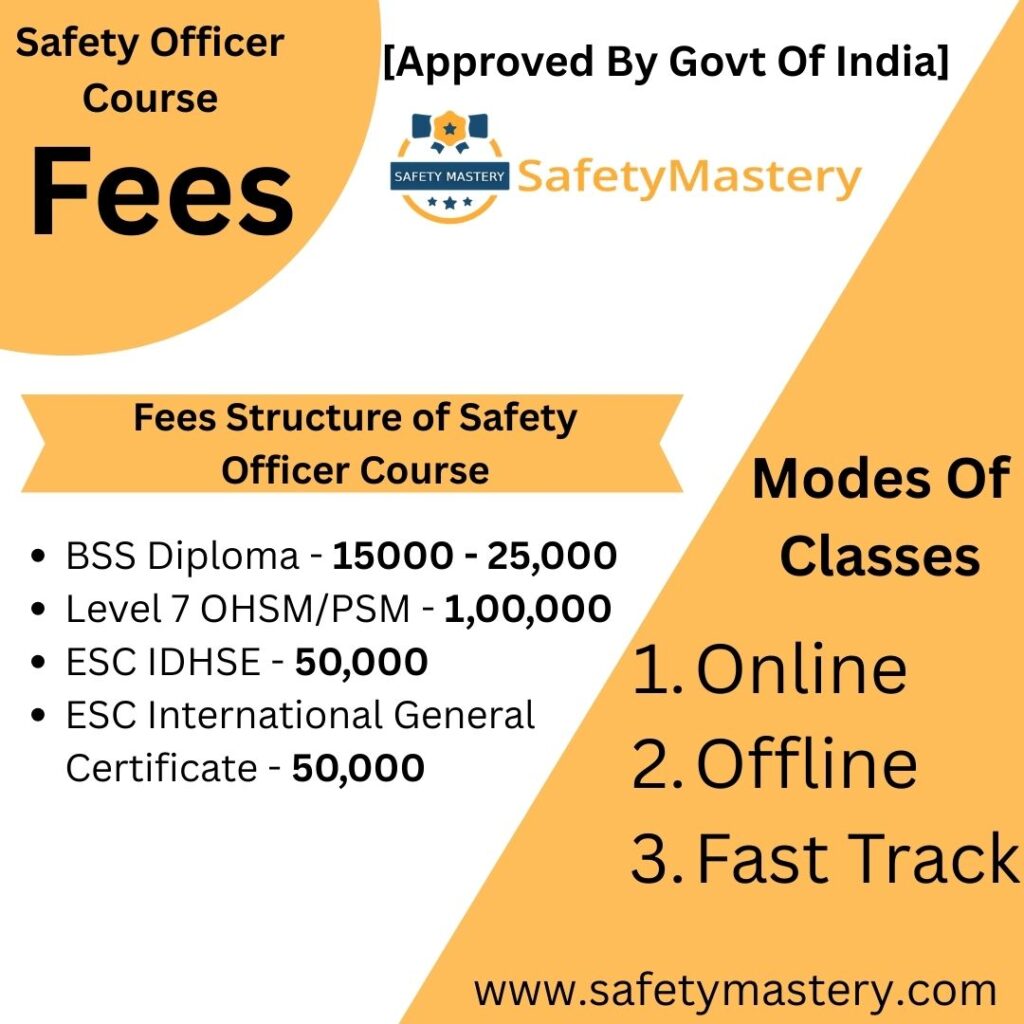
Safety Officer Course Fees in India – Complete Guide
A Safety Officer Course is one of the most in-demand professional training programs in India, opening doors to careers in construction, oil & gas, manufacturing, fire safety, and industrial safety management. One of the most common questions students have is about the fees structure.
How Much Does a Safety Officer Course Cost in India?
The fees for Safety Officer Courses in India vary based on the type of program, certification body, course duration, and mode of learning (online or classroom). On average:
| Course Name | Fees (₹) | Eligibility | Training Modes |
|---|---|---|---|
| Certificate Courses in Safety Management | 10,000 – 25,000 | 10th Pass / +2 / Any Graduate | Classroom / Online |
| Diploma in Fire and Industrial Safety (BSS Approved) | 15,000 – 25,000 | 10th Pass / +2 / ITI / Diploma Holders | Classroom / Online |
| Advanced Diplomas & International Courses (ESC IDHSE, Level 7 OHSM/PSM) | 80,000 – 1,50,000+ | Diploma / Degree in Engineering or Science | Classroom / Online / Blended |
| Scaffolding Inspector & Specialized Training | 25,000 – 70,000 | 10th Pass / ITI / Diploma Holders | Classroom / Practical On-site Training |
Safety Officer Course Duration in India
The duration of a Safety Officer Course in India depends on the type of program and certification level you choose. These courses are designed to train individuals in workplace safety, health, and risk management while preparing them for rewarding careers in industries like construction, oil & gas, manufacturing, fire & industrial safety.
1. Short-Term Safety Officer Courses
- Duration: 3 to 6 months
- Covers: Basic workplace safety, fire prevention, first aid, and risk control.
- Best for: Beginners seeking quick entry-level opportunities.
2. Diploma in Safety Officer Courses
- Duration: 1 year (sometimes up to 18 months)
- Covers: Fire and Industrial Safety, Construction Safety, Environmental Safety, Oil & Gas Safety, Electrical Safety.
- Best for: Students seeking government-approved courses like BSS Diploma with strong placement support.
3. International Safety Certifications
- ESC IDHSE: Duration 6–12 months depending on mode (online/classroom).
- Level 7 OHSM & Level 7 PSM Diplomas: Duration 12–24 months, designed for advanced professionals aiming for global recognition.
- Best for: Candidates planning to work in Gulf countries, Europe, or multinational companies.
4. Online Safety Officer Courses
- Duration: Flexible (from a few weeks to 1 year)
- Best suited for working professionals looking for self-paced learning with international recognition.
Factors Affecting Safety Officer Course Fees & Duration
The cost and duration of a Safety Officer Course in India depend on several factors. Understanding these helps students choose the right program that matches their budget and career goals.
Key Factors:
- Type of Course – Short-term certifications cost less, while advanced programs like BSS Diploma, ESC IDHSE, Level 7 OHSM, or Level 7 PSM may require higher investment and longer study periods.
- Mode of Learning – Online training is usually more affordable and flexible, whereas classroom sessions may have higher fees due to infrastructure and faculty costs.
- Training Institute – Government-approved and internationally recognized institutes like Safety Mastery may charge slightly higher, but they offer valid certifications and better placement support.
- Course Content & Specialization – Specialized modules such as construction safety, fire safety, oil & gas, or scaffolding inspector training can influence both duration and fees.
- Location of Training – Fees may vary depending on the city or state where the institute is located.
- Additional Benefits – Placement assistance, international approvals, and practical training facilities can also affect the overall cost.
Get Courses Details
Get Courses Details
Types of Safety Officer Courses and Their Fees
Choosing the right Safety Officer Course depends on career goals, industry demand, and budget. Below are some popular government-approved and internationally recognized safety courses in India, along with their typical fee ranges.
1. BSS Diploma in Fire & Safety
- Govt. approved diploma recognized across India.
- Covers fire safety, risk management, emergency procedures.
- Duration: 6–12 months
- Fees: ₹15,000 – ₹30,000
2. BSS Diploma in Industrial Safety
- Focuses on construction, oil & gas, and industrial hazard control.
- Widely accepted in India & Gulf countries.
- Duration: 1 year
- Fees: ₹15,000 – ₹30,000
3. ESC IDHSE (International Diploma in Health & Safety Engineering)
- Designed for professionals aiming for global recognition.
- Covers advanced safety management and workplace risk assessment.
- Duration: 6–8 months
- Fees: ₹50,000 – ₹1,20,000
4. Level 7 Diploma in Occupational Health & Safety Management (OHSM)
- Postgraduate-level diploma for senior safety roles.
- Prepares for managerial and consultant positions.
- Duration: 1 year
- Fees: ₹1,00,000 – ₹1,50,000
5. Level 7 Diploma in Process Safety Management (PSM)
- Advanced qualification for oil, gas, and chemical industries.
- Focused on process safety, risk control, and compliance.
- Duration: 1 year
- Fees: ₹1,00,000 – ₹1,60,000
6. Scaffolding Inspector Training (STI Certified)
- Specialized training for construction & offshore projects.
- Recognized by global employers.
- Duration: 1–3 months
- Fees: ₹20,000 – ₹40,000
Career Opportunities After Safety Officer Courses
Completing a Safety Officer Course opens up multiple career paths in India and abroad. With industries prioritizing workplace safety and compliance, certified safety professionals are in high demand.
Key Career Opportunities:
- Safety Officer / HSE Officer – Ensure workplace compliance with health and safety standards.
- Fire & Safety Supervisor – Oversee fire safety systems, evacuation plans, and emergency response.
- Construction Safety Officer – Monitor site safety, scaffolding inspections, and hazard control.
- Industrial Safety Inspector – Conduct risk assessments and ensure compliance in factories & plants.
- Oil & Gas Safety Specialist – Manage offshore and onshore safety protocols.
- Occupational Health & Safety Auditor – Assess workplace health and safety practices for improvement.
- Environmental Safety Manager – Implement eco-friendly safety measures and sustainability practices.
- Trainer / Safety Consultant – Provide safety training and consultancy services to organizations.
Why Choose This Career Path?
- Global demand for certified safety professionals.
- High job security in growing industries like oil & gas, construction, and manufacturing.
- Attractive salary packages in India and abroad.
- Opportunities to work with government-approved and international safety certifications (BSS Diploma, ESC IDHSE, Level 7 OHSM, Level 7 PSM, Scaffolding Inspector Course).

How to Choose the Right Safety Officer Course in India?
Choosing the right Safety Officer Course in India is the first step toward a successful career in occupational health and safety. With many training institutes and certifications available, candidates should focus on the following key points:
Key Points to Consider:
- Accreditation & Approvals: Ensure the course is government-approved (like BSS Diploma) or internationally recognized (e.g., ESC IDHSE, Level 7 OHSM, Level 7 PSM).
- Course Duration & Fees: Compare short-term certifications vs. advanced diplomas based on your budget and career goals.
- Industry Relevance: Choose programs that cover fire safety, construction safety, oil & gas, industrial hazards, and risk management.
- Learning Mode: Pick between online safety training for flexibility or classroom training for hands-on experience.
- Trainer Expertise: Opt for institutes with experienced trainers and practical learning modules.
- Placement Support: A good institute should provide career guidance, internships, and job placement assistance.
- Future Growth: Select a course that opens pathways to higher-level qualifications like ESC IDHSE, Level 7 OHSM, or Scaffolding Inspector Training.
FAQs on Safety Officer Course Fees and Duration
- Short-term certificate courses: 3–6 months
- Diploma & advanced courses: 6–12 months
- Specialized training (like fire & industrial safety): 1 year
- Certificate courses: ₹15,000 – ₹40,000
- Diploma courses (BSS Diploma, Industrial Safety, Construction Safety): ₹40,000 – ₹80,000
- Advanced international certifications (ESC IDHSE, Level 7 OHSM, Level 7 PSM): ₹90,000 – ₹1.5 Lakhs+
Yes, many courses like the BSS Diploma in Safety Management are Govt. of India recognized and widely accepted by industries.
Yes, online training is generally 20–30% cheaper, while classroom courses may include additional fees for workshops and practical training.
- Type of course (Certificate, Diploma, Advanced)
- Training mode (Online / Classroom)
- Approval body (Govt. or International)
- Practical sessions & exam fees included
Absolutely, with industries demanding certified safety professionals, completing a recognized safety officer course leads to better job opportunities, higher salaries, and career growth in India & abroad.
The average fee ranges from ₹10,000 to ₹1,50,000 depending on the course level, institution, and training mode.
Yes, We offer EMI or installment payment plans to make the course more affordable. Check with the training provider for details.
Fees typically cover tuition, study materials, exams, and certification. Some advanced courses may also include industrial visits or on-site training.